
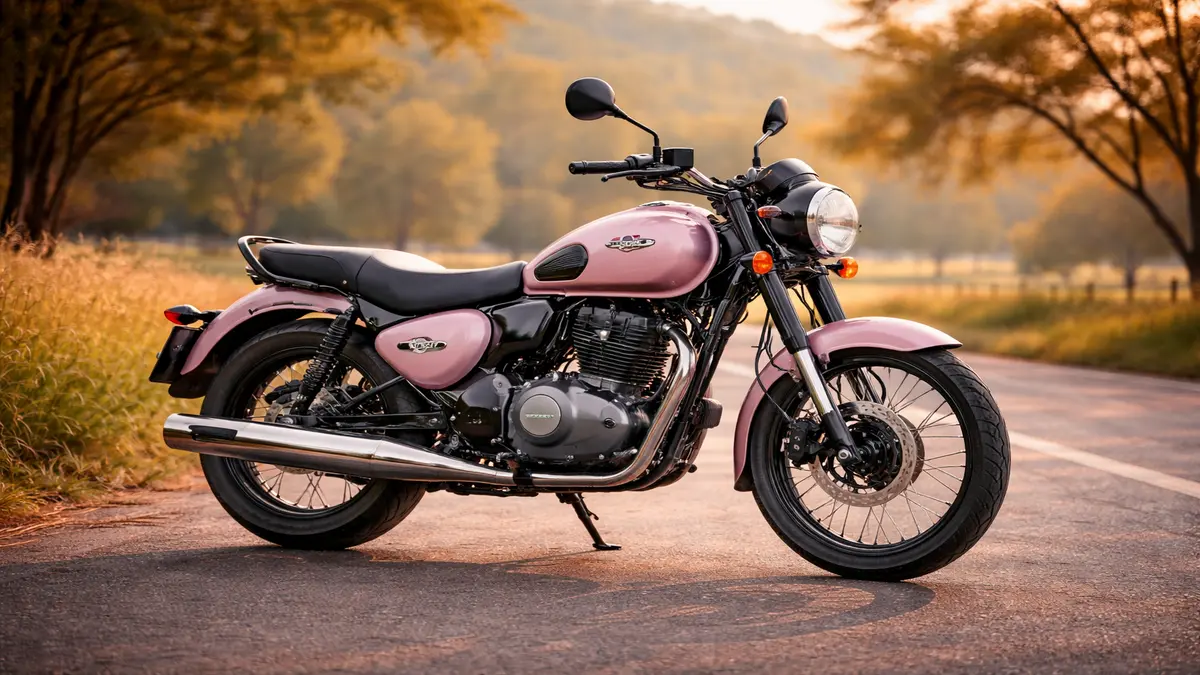
Curious about the Royal Enfield Hybrid 2026? Here’s a realistic India buyer guide covering expected price, mileage, how hybrid tech may work, pros and cons, comparison with rivals, FAQs, and mistakes to avoid before buying.
The idea of a Royal Enfield Hybrid sounds like something that shouldn’t exist… and yet, it makes total sense in 2026.
Royal Enfield is the brand that’s famous for its old-school charm. People buy it for the weight, the torque, and the feel. For years, it has been the “heart over head” choice — not because it’s the most fuel-efficient, not because it’s the fastest, but because it has personality.
Now Royal Enfield hybrid technology is basically the opposite of personality. It’s efficiency, control modules, batteries, sensors, start-stop, regenerative systems. It’s “smart,” not “raw.”
So why are people even searching for “Royal Enfield Hybrid 2026”?
Because the world has changed. India has changed. Riders have changed.
Fuel prices hit hard. Traffic is worse than ever. Emission rules are stricter. People who love Royal Enfield also want a bike that can behave better in traffic — without turning into a totally silent electric machine overnight.
A hybrid Royal Enfield could be that middle path.
Not a full EV. Not pure petrol either. Something in between.
This guide is written like a real buyer conversation, not like an advertisement. If you’re thinking about waiting for a hybrid, or you’re just curious how it could work, read the whole thing. It will help you separate reality from fantasy.
1) Why a Hybrid Royal Enfield Could Actually Happen
In India, Royal Enfield is no longer a “niche classic bike.” It’s a mainstream brand now. And with mainstream comes pressure:
- more competition
- more regulations
- more price sensitivity
- more expectations from riders
Royal Enfield also knows something deeply: a lot of people want the look and feel of an RE, but not the running cost and heat of an RE.
For example:
- a typical city commuter may love the Classic 350’s presence
- but they hate the fuel expense in daily traffic
- they hate the constant clutch work
- they hate how heavy it feels in bumper-to-bumper jams
- they hate the heat when crawling in 1st gear
Hybrid tech can solve a very specific set of problems without killing the Enfield identity.
What Royal Enfield hybrid can improve:
- stop-and-go smoothness
- fuel efficiency in traffic
- heat management (engine doesn’t struggle as much)
- quicker low-speed response
- start-stop convenience
- lower emissions without forcing full EV adoption
So yes — a hybrid Enfield doesn’t sound romantic, but it sounds very practical.
And practical sells.
2) “Royal Enfield Hybrid Motorcycle” Explained Like You’re Talking to a Friend
Before anyone gets excited, we need to understand what a hybrid bike could actually be.
Because most people imagine hybrid like a car:
“Petrol engine and battery both run it, and mileage becomes amazing.”
Motorcycles are different:
- space is limited
- weight matters a lot
- battery adds bulk
- cost rises quickly
So a hybrid motorcycle usually falls into one of these categories:
A) Mild Royal Enfield Hybrid (most realistic)
This is the simplest hybrid form.
- Petrol engine is still the main power source
- Electric motor helps during starts and low-speed crawling
- Start-stop turns engine off at traffic lights
- Small battery gets charged by engine / regenerative braking
- No “full electric riding” in a proper sense
In real life, it feels like:
- smoother take-off
- less engine strain in traffic
- slightly better mileage
B) Full Hybrid (less likely at first)
- Bike can move slowly on electric for short distance
- Petrol + motor combine for acceleration
- Bigger battery and stronger motor
- More weight and more cost
C) Plug-in Hybrid (unlikely for first version)
- Can charge with plug
- Bigger battery
- More EV-like running
- Too expensive, too heavy for mainstream India
If Royal Enfield brings hybrid, the smartest move is:
Mild Hybrid first.
Because it keeps:
- weight under control
- cost under control
- complexity manageable
- “engine feel” still alive
3) Is Royal Enfield Hybrid Confirmed for 2026?
Let’s be honest and clear here:
As of now:
Royal Enfield has NOT officially confirmed a Royal Enfield hybrid motorcycle launch for 2026.
But — and this is important — Royal Enfield has publicly committed to electrification plans, especially with its electric brand direction and long-term roadmap. That’s why Royal Enfield hybrid rumours feel believable. In many industries, hybrids have become a stepping stone before full EV domination.
So you should treat “RE Hybrid 2026” as:
- plausible
- possible
- but not guaranteed
In other words:
Don’t plan your life around it unless Royal Enfield confirms it officially.
4) Expected Royal Enfield Hybrid Price in India (Realistic Range)
This is where dreams meet reality.
Hybrid adds cost. Always.
Even mild-hybrid systems require:
- motor-generator
- battery pack
- controller unit
- additional wiring and sensors
- software tuning
- stronger starter / alternator systems
Expected Royal Enfield Hybrid RE Price (India)
If launched in 2026:
Expected ex-showroom range: ₹2.00 lakh – ₹2.80 lakh
Expected on-road range: ₹2.30 lakh – ₹3.20 lakh
Why such a wide range?
Because price depends on what platform it uses:
- If it’s built on a 350-style platform: lower end
- If it’s built on a new premium platform: higher end
- If it offers “electric-only crawl mode”: price rises
Also, “Royal Enfield” is no longer cheap. Even normal models now touch premium segments.
Honest expectation:
If RE wants real sales volume, they’ll try to keep it near:
₹2.2–₹2.6 lakh ex-showroom
If they position it as premium tech:
It can easily cross ₹3 lakh on-road in metros.
5) Expected Mileage of Royal Enfield Hybrid (Reality, Not Fantasy)
Let’s kill the fake claims right now.
A heavy Royal Enfield style bike will not suddenly give:
- 60 km/l
- 70 km/l
- 80 km/l
Those numbers are not realistic.
Hybrid improves efficiency mainly in:
- traffic
- low-speed riding
- start-stop situations
On highways at constant speed, hybrid advantage reduces.
Current RE mileage reality (for many riders)
- In city traffic: often drops
- Mixed riding: respectable but not commuter-bike level
Royal Enfield Hybrid improvement expectation
A mild hybrid can improve mileage by:
10% to 25% depending on tuning and usage.
So if a petrol RE gives, say:
- 30–35 km/l in mixed use
A hybrid could push it to: - 35–45 km/l in mixed use
That’s a realistic improvement.
Where hybrid shines:
- daily city commute
- office ride with signals
- crowded roads
- frequent stops
Where it shines less:
- long highway cruising at steady speed
6) Performance & Riding Feel: Will It Still Feel Like a Royal Enfield?
This is the emotional part.
People don’t buy Royal Enfield just for transport. They buy it for:
- torque feel
- calm riding
- heavy stable body
- engine character
A mild hybrid doesn’t remove the engine.
It supports it.
So if done correctly, hybrid can actually make RE feel better:
What may improve:
- smoother initial acceleration
- less jerkiness at crawling speeds
- better low-rpm response
- smoother gear shifts because motor assists momentarily
- less stalling tendency in traffic
What may change:
- start-stop may reduce the “continuous thump” at signals
- engine may feel calmer / quieter at low speed
- some riders may feel it’s less “raw”
But honestly, many daily riders will love it.
Because they don’t want drama every morning. They want comfort.
7) A Realistic Ownership Story (How Royal Enfield Hybrid Could Feel in Daily India)
Let me paint a common Indian situation.
You buy a Classic 350. You love it.
For 2 weeks, it’s my honeymoon.
Then real life starts:
- office traffic
- jammed roads
- constant clutch
- heat from engine
- mileage not great
- after work tiredness
Now imagine a hybrid version.
Same bike feel, same posture, same road presence.
But in traffic:
- engine switches off at signals
- electric motor helps you crawl without stressing the engine
- starts feel cleaner
- clutch feels less punishing
Now you reach the office feeling less tired.
This is exactly why hybrid matters.
Not for top speed.
Not for racing.
For daily peace.
It’s like the difference between:
- a heavy manual gear car in traffic
vs - a smart hybrid system that reduces fatigue
In India, fatigue is real.
8) Pros and Cons of Royal Enfield Hybrid (If It Comes)
Pros
- Better fuel efficiency in city
- Smoother traffic performance
- Less heat and stress at low speed
- Lower emissions
- “Future-ready” resale potential
- Great option for those not ready for EV
Cons
- Higher price
- More complexity (battery + electronics)
- Repair cost can be higher after warranty
- Service center dependency (not every local mechanic can fix hybrid tech)
- Purists may not like it
- Real-world advantage depends on riding conditions
Hybrid is like a smart device:
Amazing when it works.
But needs better support.
9) Who Should Buy a Royal Enfield Hybrid Royal Enfield?
A hybrid Enfield will suit these buyers:
- city commuters who love RE identity
- office riders who want comfort in traffic
- people who want to keep the bike long-term (5+ years)
- riders who want modern tech but not full EV
- buyers who care about mileage but refuse to buy a small commuter bike
Basically:
those who want RE feel with smarter running costs.
10) Who Should Avoid It?
Avoid it if:
- you ride mostly highways at steady high speed
- you upgrade bikes quickly every 1–2 years
- you hate tech and want fully simple engines
- you live far from trained service centers
- you want the “pure raw thump” experience only
For such riders, classic petrol Enfields may still be better.
11) Comparison Table: Hybrid RE vs Key Alternatives (India)
Here’s a clean buyer comparison table:
| Option | Best For | Fuel Cost | City Comfort | Highway Comfort | Maintenance Risk | Character/Feel |
| Royal Enfield Hybrid (expected) | City RE lovers wanting mileage | Medium-Low | High | Good | Medium-High | High (if tuned right) |
| Classic 350 / Bullet 350 (petrol) | Pure RE charm | Medium | Medium | Good | Low | Very high |
| Himalayan / 450 platform | Touring, power lovers | Medium | Medium | Very high | Medium | High |
| Honda CB350 | Smooth classic alternative | Medium-Low | High | Good | Low-Medium | Medium |
| Jawa / Yezdi | Classic style + speed | Medium | Medium | Good | Medium | Medium-High |
| Electric motorcycle (future) | low running cost city use | Very low | Very high | Depends | Medium-High | Different vibe |
Hybrid sits right between petrol and EV.
12) Mistakes to Avoid If You Buy Hybrid Early
Hybrid launches are exciting, but early buyers often make costly mistakes.
Mistake 1: Buying first batch without waiting for feedback
First batch bikes may get:
- software updates
- battery tuning updates
- minor part improvements
Smart approach:
Wait for 3–6 months feedback if possible.
Mistake 2: Not checking hybrid warranty details
You must confirm:
- battery warranty years/km
- controller/motor warranty
- what voids warranty
- service schedule requirements
Mistake 3: Assuming every service center can repair it
Hybrid needs trained technicians.
Before buying:
- confirm hybrid-trained center in your city
- ask about parts availability timeline
Mistake 4: Paying extra dealer add-ons blindly
Dealers may push:
- expensive insurance add-ons
- “premium service packages”
- coatings, warranties, accessories bundles
Stick to essentials.
Mistake 5: Ignoring real total cost of ownership
Hybrids can save fuel, yes.
But:
- battery replacement later can cost money
- electronics repairs can cost money
So calculate total ownership, not just mileage.
Related Post
Yamaha MT-15 V2 (2025) – The Street Fighter That Rules the Roads!
Hero Vida VX2 Electric Scooter
Suzuki Burgman Hydrogen Scooter 2025:200 KM Range & Eco Power
Kawasaki Ninja H2R – The Beast That Breaks All Limits
All BMW Bike Models, Price, Images, Specs
13) FAQs (Royal Enfield Hybrid 2026 India)
Q1: Is Royal Enfield Hybrid confirmed for 2026?
No official confirmation yet. It’s still speculation. Treat it as possible, not guaranteed.
Q2: Will hybrid RE give 60–70 km/l?
Highly unlikely. Realistic expectation is 35–45 km/l depending on the final model and usage.
Q3: Will it run on electricity only?
If mild hybrid, no. It may assist only. A full hybrid might allow short-distance low-speed movement.
Q4: Is hybrid better than full electric?
Depends on your usage:
- hybrid = easier for long rides, no range anxiety
- EV = lowest running cost but range/charging matters
Q5: Is hybrid maintenance expensive?
It can be costlier than petrol-only bikes due to electronics. But fuel savings may offset some cost.
Q6: Should I wait or buy Classic 350 now?
If you need a bike now, don’t wait based on rumours.
If you can wait and want tech, watch official announcements.
Q7: Will hybrid kill the Enfield vibe?
Not necessarily. Mild hybrid keeps engine as main power. It may actually improve city usability while keeping character.
14) Final Verdict: Is Royal Enfield Hybrid Worth It in 2026?
A Royal Enfield hybrid, if launched, could be one of the smartest “new India” moves by RE.
Because the truth is:
People love Enfield — but people also want convenience.
Hybrid can deliver:
- better mileage
- smoother traffic riding
- reduced fatigue
- future-ready ownership
But it will also bring:
- higher cost
- more complexity
- stronger service dependency
So my final advice is simple:
If you want a proven, pure experience:
Go for the current petrol models.
If you want future-ready and city-friendly Enfield life:
Hybrid could be worth waiting for — but only after official confirmation and early user feedback.
Hybrid isn’t for everyone.
But for daily riders stuck in Indian traffic, it might be the most practical Enfield idea ever.


