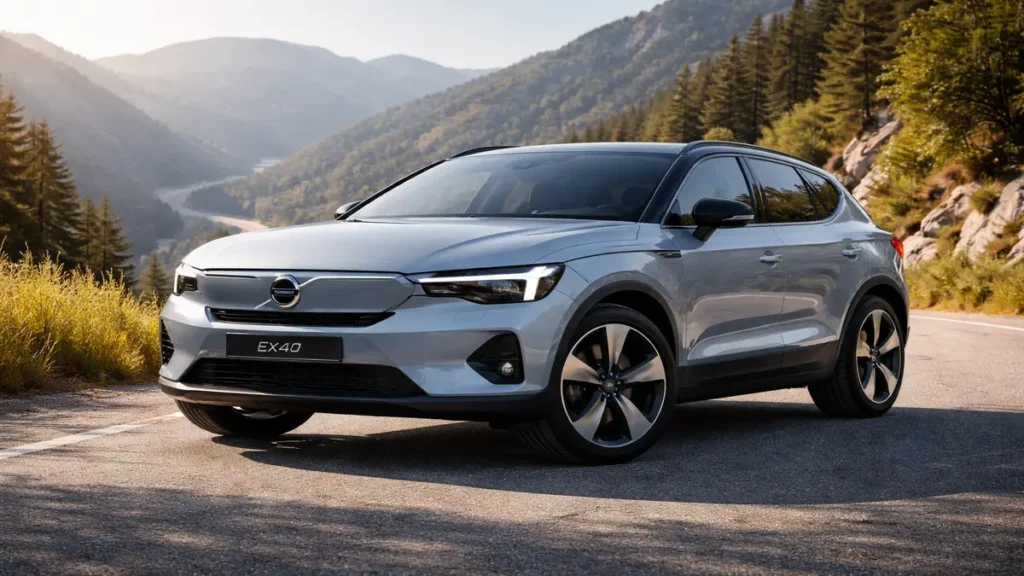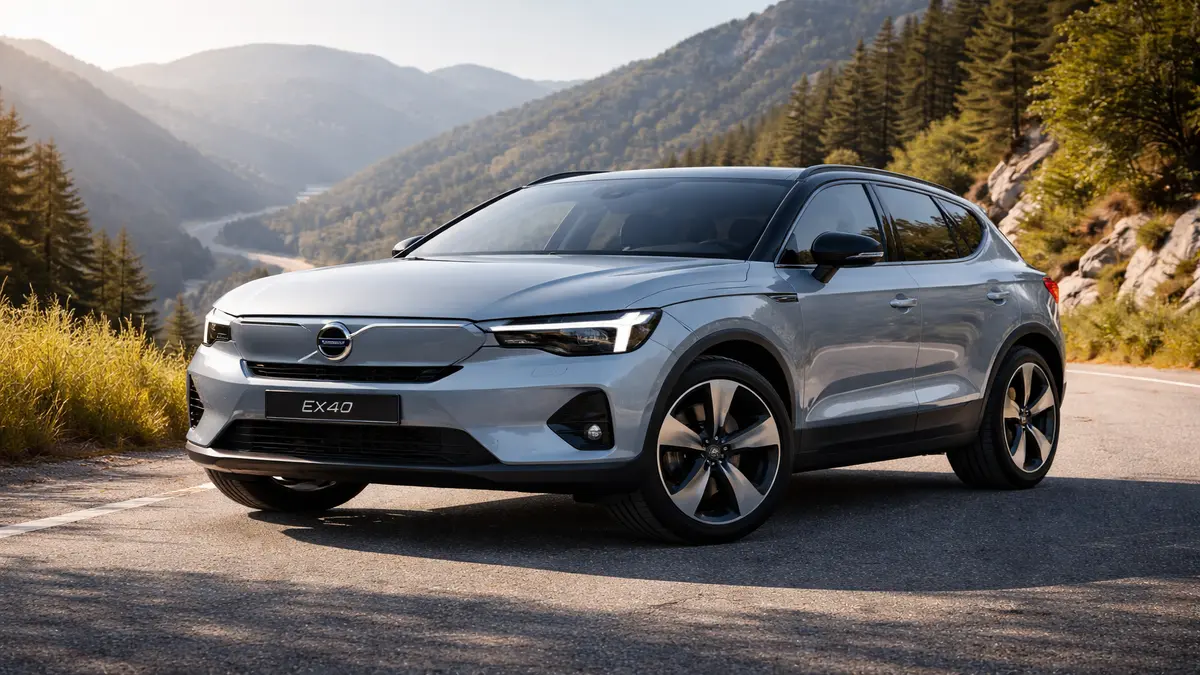
Planning to buy the Volvo EX40 2026? Read this real-world India review with latest price, practical range, charging time, comfort, features, comparison table, FAQs, and mistakes to avoid before purchase.
If you’ve ever driven a Volvo, you know it’s not the loudest car in the room. It doesn’t try too hard. It doesn’t beg for attention. It just feels… serious. Safe. Solid. Like someone built it with responsibility, not with trends.
That same mindset makes the Volvo EX40 2026 a very interesting car in India’s premium EV market in 2026.
Because if you’re spending around ₹50 lakh+, you’re not buying “just an EV.” You’re buying peace of mind. You want a car that can be used daily, feels premium inside, won’t exhaust you in city traffic, and still gives you the confidence to travel with family.
And that’s exactly where Volvo EX40 2026 fits in.
But here’s the truth most people don’t say clearly: the Volvo EX40 2026 is not for everyone. It’s not trying to compete with the flashiest tech dashboards or the most aggressive designs. It’s built like a proper European premium SUV that happens to be electric — and that’s its charm.
In this article, I’ll break it down in a real buyer-friendly way:
- Volvo EX40 2026 price in India (2026)
- Variants you should consider
- Range reality vs claimed range
- Charging time and charging costs
- Comfort, practicality, boot space, cabin quality
- Driving experience (city and highway)
- Maintenance expectations
- Comparison table vs rivals
- Mistakes to avoid before buying
- FAQs (most asked questions)
Let’s start.
1) Volvo EX40 2026 in Simple Words: What Kind of EV is This?
The Volvo EX40 2026 is a compact luxury electric SUV that’s designed to feel:
- safe
- premium
- stable
- easy to live with
It’s not a “new cool electric company” product. It’s the EV version of a mature luxury SUV. Volvo is basically saying:
“You want electric? Fine. But we won’t compromise on safety and comfort.”
And that approach matters in India because not every premium EV handles Indian road conditions with the same confidence.
Also, Volvo has clarified that EX40 is the same car as the XC40 Recharge pure electric, only renamed.
2) Volvo EX40 2026 Price in India
Pricing changes depending on city, insurance, and variant. But the most common India pricing listings show:
Volvo EX40 2026 Ex-Showroom Price (India)
- Around ₹49 lakh to ₹50.10 lakh (listed by major portals)
Some listings show the Volvo EX40 2026 price around ₹50.10 lakh for the Plus variant.
On-Road Price (India, typical)
Depending on your city and insurance:
- ₹56 lakh to ₹62 lakh is a realistic on-road window in many cases
Key point:
If you’re planning for 2026 buying, don’t calculate only ex-showroom. EV insurance can be higher than expected in premium categories.
3) Volvo EX40 2026 Variants (India) – Which One Makes Sense?
Variant availability can change, but common listings mention variants like:
- Plus
- Ultimate AWD
My simple advice:
- If your driving is mostly city + occasional highways, single motor / non-AWD versions are more than enough.
- If you want maximum performance and you live in regions with rain, hill roads, and want extra grip confidence, AWD makes sense.
But remember: AWD versions usually cost more and can deliver slightly lower real-world range due to higher power.
4) Range: The Real-World Truth (Not Marketing)
Range is the biggest factor in EV buying — and also the most misunderstood.
Different sources mention:
- Around 475 km (69 kWh, Plus variant, WLTP-style figures depending on listing)
- Some listings mention higher numbers like 592 km (this can be testing-cycle dependent and not what most owners will see daily).
So what should you expect in India in 2026?
Real-world range expectation (practical)
For the 69 kWh variant:
- City (calm driving, AC normal): 380–450 km possible
- Mixed use: 320–400 km
- Highway at higher speed: 280–350 km
This isn’t because Volvo EX40 2026is weak — it’s just how EV range works.
Your range depends on:
- speed
- temperature
- AC load
- tyre pressure
- passenger load
- hill driving
So if someone sells you an EV by saying, “It will always give 475 km,” they’re oversimplifying reality.
5) Charging Time: What It Means for Your Daily Life
Charging is where EV ownership becomes either easy or stressful. Volvo EX40 2026 supports fast charging, and some listings mention:
- 10% to 80% in ~28 minutes (150 kW DC charger)
That’s strong — but only if you have access to fast chargers on highways/cities.
Home charging (most owners)
At home using wall box, charging usually takes several hours, depending on charger output. Some listing pages mention home charging around 7 hours (varies by charger type).
What this means in real life
For most Indian buyers, the real charging routine becomes:
- plug in at night
- wake up to 80–100%
- drive daily without thinking
If you have home charging, EX40 becomes peaceful.
If you do not have home charging, any premium EV becomes frustrating.
6) Running Cost in India: EV Advantage Still Wins
Let’s talk like a practical Indian buyer.
Most people don’t buy EVs only for environmental reasons. They buy because:
petrol cost is painful.
In 2026, fuel is still not cheap. For a premium SUV, fuel burn is heavy.
EX40 gives you a major running cost advantage:
- electricity cost per km is generally far lower than petrol SUVs
- daily commute becomes cheaper
- long-term savings can become meaningful
But I’ll be honest: at ₹50 lakh, you’re not recovering cost only through savings. You’re buying for:
- luxury
- safety
- comfort
- Volvo peace-of-mind
and EV savings is the bonus.
7) Driving Experience: How EX40 Feels on Indian Roads
This is where Volvo’s personality shows.
In the city
EX40 feels:
- smooth
- quick to respond
- effortless
- quiet (luxury quiet, not empty quiet)
In Indian traffic, this is a massive benefit. Your fatigue reduces.
On highways
EX40 feels:
- stable
- planted
- confident
And that’s a big Volvo advantage. Many EVs are fast in straight lines but don’t feel confidence inspiring at speed on imperfect highways. Volvo usually tunes suspension and chassis for stability.
Performance (feel)
Some sources mention power around 238 hp for Plus and higher power for AWD versions.
In real world terms, even the lower version feels strong because EV torque is instant.
8) Interior, Space & Comfort: Where EX40 Feels Premium
Volvo cabin quality usually gives a “clean premium” vibe, not “extra shiny.”
What you feel in the cabin
- calm layout
- premium materials
- supportive seats
- good visibility
Space and practicality
EX40 is compact-luxury category, so:
- front seats feel spacious
- rear space is okay for family use
- tall passengers in rear may want to check comfort before buying
Boot space around 414 litres is listed on portals.
That’s usable for luggage, but not huge like larger SUVs.
9) Safety: The Strongest Reason to Choose Volvo
If there’s one reason people trust Volvo, it’s safety.
In India, where roads are unpredictable, safety matters more than “bigger touchscreen.”
Volvo also offers ADAS and advanced safety tech depending on variant, though what you get depends on the exact trim and year.
For family buyers, EX40 becomes an emotionally satisfying choice because you feel like you’re doing the “responsible premium purchase.”
10) Ownership & Maintenance: What to Expect
EVs generally have:
- fewer moving parts than petrol cars
- no engine oil changes
- less mechanical wear
But premium EV ownership still includes:
- software updates
- brake fluid
- coolant systems for battery thermal management
- suspension wear (Indian roads)
- tyres (EV tyres wear faster due to torque + weight)
So yes, maintenance can be lower than ICE in some ways, but don’t assume it will be “almost free.”
Also, Volvo service quality varies city-to-city, so always check:
- nearest service center
- EV-trained technicians
- availability of parts
11) Who Should Buy the Volvo EX40 2026?
Buy it if:
- you want a premium EV with a mature feel
- you want high safety confidence
- you want luxury without showing off
- you have home charging
- you drive daily and want calm driving
It’s ideal for:
- families upgrading from premium SUVs
- city executives
- people who value safety + comfort
- buyers who prefer premium brands over new EV startups
12) Who Should Avoid EX40
Avoid it if:
- you don’t have reliable home charging
- you drive 400+ km daily without charging access
- you want maximum rear-seat space like bigger SUVs
- you want “sporty aggressive styling” and attention
EX40 is classy, not flashy.
13) Comparison Table (Volvo EX40 2026 vs Rivals in India)
Here’s a comparison table that matches how Indian buyers think:
| EV SUV | Best For | Real Range | Cabin Feel | Performance | Brand Strength | Key Concern |
| Volvo EX40 | Safety + premium calm | 320–450 km | Clean luxury | Strong | Very strong | Higher price |
| Volvo EX30 | Newer smaller luxury EV | Similar class range | Modern | Quick | Strong | Smaller size |
| Kia EV6 | Long range + sporty premium | High | Futuristic | Very strong | Strong | Price |
| Hyundai Ioniq 5 | Space + comfort | High | Lounge-like | Smooth | Strong | Availability |
| BMW iX1 | Sporty premium badge | Good | Premium | Strong | Strong | Range/value |
| Mercedes EQA | Brand + compact luxury | Good | Premium | Smooth | Strong | Price/value |
Also, EX40 is often compared with XC40 Recharge because it’s essentially the renamed version.
14) Mistakes to Avoid Before Buying Volvo EX40 2026 (Very Important)
This section saves money and regret.
Mistake 1: Buying EV without home charging setup
This is the biggest mistake.
Before booking, confirm:
- dedicated parking
- wiring permission (society)
- wall box installation plan
Mistake 2: Trusting claimed range blindly
Always test-drive and ask for real owner feedback.
You should buy EV for:
- 70% of claimed range as normal expectation
Mistake 3: Not checking insurance cost
Premium EV insurance can shock you.
Get:
- showroom insurance quote
- outside insurance quote
Compare properly.
Mistake 4: Choosing AWD only for “status”
AWD feels premium but can reduce range and increase cost.
Choose AWD only if you need:
- more power
- hill driving
- extra traction confidence
Mistake 5: Ignoring tyre costs
EV tyres wear faster.
Ask:
- tyre replacement cost
- tyre warranty rules
- recommended tyre brand
Mistake 6: Not planning highway charging
If you travel often:
- map charging points on your route
- check charger reliability
- avoid depending on single charging station
15) Range Reality in India: What Changes the EX40 Range the Most
If there is one thing you should understand before buying any premium EV in India, it’s this:
Range is not a fixed number. It’s a moving result.
Volvo may publish a standard range figure, and portals may list range numbers, but your real-world experience depends on your driving pattern and conditions. The EX40 is quite efficient for a luxury SUV, but it still follows EV physics.
The biggest factors that change range in India
1) Driving speed (the biggest one)
EVs lose range quickly at higher speeds because aerodynamic drag rises sharply.
- If you drive calmly at 60–80 km/h, range stays strong.
- If you cruise at 100–120 km/h consistently, range drops noticeably.
Many buyers don’t believe this until they experience it. This is why two owners of the same EV can have totally different range outcomes.
2) Traffic type (EV advantage zone)
In city traffic, EVs can actually feel more efficient than petrol/diesel because:
- no idling fuel loss
- regenerative braking recovers energy
- slow speed driving is smoother
So if your usage is mostly city, EX40 can feel “easy to live with.”
3) AC usage (realistic effect)
In India, AC is always used, and it affects range—especially in summer.
The impact usually becomes stronger when:
- cabin temperature difference is large (very hot outside)
- you use max cooling constantly
A smart habit is:
- cool cabin initially
- then set moderate temperature
- use recirculation in peak heat
4) Tyre pressure and tyre type
Low tyre pressure reduces range. It also increases tyre wear.
For EVs, tyre pressure is not a “minor detail.” It’s important.
5) Load and luggage
A fully loaded EX40 with 4–5 passengers and luggage will give lower range than a lightly loaded car.
Practical range you should plan for
If you want to plan safely (not in perfect conditions), a sensible approach is:
- City plan: 350–420 km
- Mixed plan: 320–380 km
- Highway plan: 280–340 km
If you get more than this, great.
But planning with these numbers will keep your ownership stress-free.
16) Charging at Home in India: What the Setup Looks Like
Most premium EV owners in India eventually realise one truth:
Home charging is the real luxury feature.
Without home charging, even the best EV becomes a planning headache.
With home charging, your EV feels like a phone:
Plug it in at night, wake up full.
What you need for home charging
Typically, you need:
- dedicated parking space
- permission for wiring (society/apartment)
- stable electricity connection
- proper earthing (very important)
Most buyers install a home wall box charger.
How home charging fits into real life
A typical routine:
- arrive home with 30–50% charge
- plug in
- next morning it’s back to 80–100%
Even if you drive 40–60 km daily, you won’t need to charge every day if you don’t want. You can charge every 2–3 days too. That flexibility is what makes EV ownership feel modern.
Charging tips that protect battery
- Don’t always charge to 100% unless needed
- Keep daily charging between 20% and 80% if possible
- Use 100% only for long trips
This isn’t fear. It’s just smart battery handling.
Read More
Hyundai Loniq 6 Review: Stylish, Futuristic & Fully Electric Car in India
Kia EV9 Review 2025 – Specs, Price, Range & Global Market Insights
Kia EV3 – The Compact Electric SUV Redefining Affordable EV Mobility
17)FAQS – Volvo EX40 2026 India (2026)
Q1: Is the Volvo EX40 2026 the same car as the XC40 Recharge?
Yes. Volvo has confirmed that the EX40 is basically the renamed version of the XC40 Recharge (pure electric). The car remains largely the same — the name just changed.
Q2: What is the Volvo EX40 2026 price in India?
Most listings show the Volvo EX40 2026 priced around ₹49 to ₹50.10 lakh (ex-showroom). Depending on your city, insurance, and registration charges, the on-road price usually goes above ₹56 lakh.
Q3: What real-world range can I expect from the Volvo EX40 2026?
In real Indian driving conditions, the EX40 can usually deliver around 320–450 km, depending on how you drive. Calm city driving gives better range, while fast highway driving reduces it.
Q4: How quickly can the Volvo EX40 2026 charge?
With a fast DC charger, the EX40 is listed to charge from 10% to 80% in about 28 minutes (on a 150 kW charger). In real life, time can vary slightly based on temperature and charger availability.
Q5: Is the Volvo EX40 2026 good for long road trips?
Yes, it can be a very comfortable long-distance EV. The ride quality feels stable and premium. But like any EV, long trips require smart planning — you need to plan your charging stops properly.
Q6: Is Volvo EX40 2026 maintenance expensive?
Compared to petrol SUVs, routine maintenance can be lower because EVs have fewer mechanical parts. However, it’s still a premium car, so costs like tyres, suspension parts, and service quality still matter.
Q7: Should I buy the Volvo EX40 2026 or the Volvo EX30?
If you want something more compact, newer, and modern, EX30 can offer better value. But if you want a more mature premium feel, slightly larger size, and stronger SUV presence, EX40 makes more sense. The right choice depends on your family space needs, budget, and how you’ll use the car.
16) Final Verdict: Is Volvo EX40 2026 Worth Buying in 2026?
The Volvo EX40 2026 is for buyers who want premium EV ownership without stress.
It doesn’t try to be the flashiest. It tries to be the safest, calmest, most confident car you can drive daily in India.
If you have home charging and your daily running is sensible, it can feel like the perfect luxury EV because:
- city driving becomes effortless
- highway stability feels strong
- cabin is premium and quiet
- Volvo safety gives peace
If you want a premium EV that feels mature and dependable, EX40 is one of the smartest choices in its bracket.