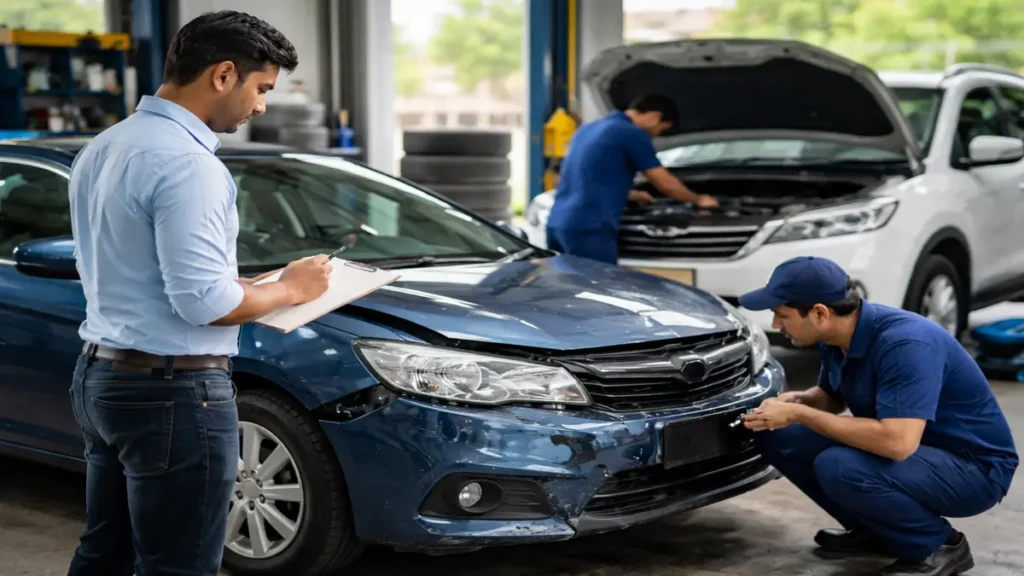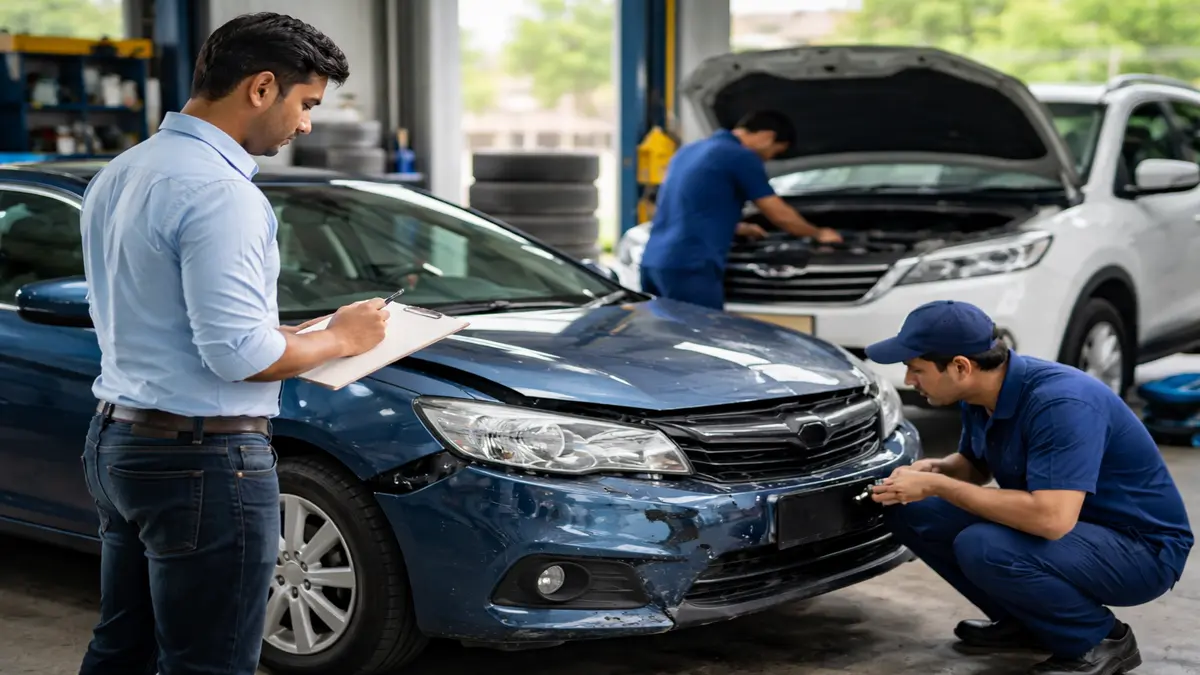
Learn car insurance claim process in India (2026) with cashless vs reimbursement steps, required documents, timelines, mistakes to avoid and FAQs.
Car insurance is one of those things we buy and forget.
We remember it only when something goes wrong.
A scratch in a parking lot. A bumper gets cracked in traffic. A monsoon flood enters the engine bay. A careless driver hits your car and disappears. Or the worst case, the car gets stolen.
That is when the insurance policy stops being a piece of paper and becomes a real support system.
But here is the truth most people learn late:
A good claim is not only about having insurance. It is also about following the correct claim process.
Many claims in India get delayed, reduced, or rejected because of small mistakes like:
- informing the insurer late
- shifting the car before inspection (in some cases)
- repairing without survey approval
- missing documents
- not having correct add-ons
- choosing the wrong claim type (cashless vs reimbursement)
So this is a complete 2026 guide to help you handle a claim smoothly in India. No complicated legal talk, only practical steps a normal car owner can follow.
1) First Understand Your Claim Type in India
Not every claim is the same. The process depends on what happened.
A) Own Damage Claim (OD Claim)
This covers damage to your own car due to:
- accident
- dents, bumper damage
- flood and waterlogging
- fire
- fallen tree or object
- vandalism
This claim works only if you have:
- Comprehensive policy or Standalone Own Damage policy
Third party only policy does not cover your own car damage.
B) Third Party Claim
This covers damage or injury you caused to someone else.
If your car hits another vehicle or injures someone, third party liability covers:
- injury or death compensation
- property damage up to limits as per law
These claims are typically handled differently and often involve legal procedure and MACT in bigger cases.
C) Theft Claim
When the car is stolen, the claim is based on:
- FIR
- non-traceable report
- RC and key submission
- insurance company verification
This is a longer process.
D) Personal Accident Claim
Personal Accident cover is for:
- driver death or disability
- owner driver cover
- sometimes passenger cover if you have add-on
2) Real Story: The Mistake That Cost Someone Money
Let me share a simple real-life style situation.
A person in Pune parked his car in the evening near a market. When he returned, the car had deep scratches and a dent. No CCTV footage. No idea who did it.
He thought:
“It is just a dent. I’ll repair first and claim later.”
He sent the car to a local workshop, repaired it, then submitted the bill for insurance. The insurer rejected it, saying:
“No pre inspection. No survey report. Repairs done without approval.”
He lost the entire claim amount.
This happens more than you think, especially for small parking damages.
So remember one rule:
If you want to claim, do not repair before insurer inspection and approval.
3) What to Do Immediately After an Accident
This is the most important part.
Step 1: Ensure safety first
- Move the car to a safe spot if possible
- Turn on hazard lights
- Use warning triangle if available
Step 2: Check injuries
If anyone is hurt:
- call local emergency services
- take them to nearest hospital
Step 3: Take photos and video
This protects you. Take clear photos of:
- car damage
- the other vehicle (if involved)
- number plates
- road conditions
- location wide shot
Even for a small scratch, photos help.
Step 4: Collect other party details
If another vehicle is involved:
- driver name and phone
- vehicle number
- insurance company details (if possible)
Step 5: Avoid arguments and blame
Never fight, never admit guilt on record. Keep it calm and factual.
4) Do You Need an FIR for Car Insurance Claim in India?
Many people panic about FIR.
The reality:
FIR is mandatory in these cases:
- theft of vehicle
- major accidents involving injury or death
- hit and run
- fire due to unknown reasons or suspicious cases
- riot, vandalism, malicious damage
FIR is usually not required in these cases:
- minor accident
- bumper crack
- small dent
- scratch in parking
- damage with clear proof and no dispute
But insurers can still ask FIR depending on circumstances, so always confirm with the insurer.
5) Claim Types: Cashless vs Reimbursement
These two decide your experience.
A) Cashless Claim
- Repair at insurer network garage
- Insurer pays garage directly (as per approval)
- You pay only non-covered charges
Best for:
- smooth process
- big repair bills
- people who want minimum hassle
B) Reimbursement Claim
- Repair at any garage you prefer
- You pay full amount first
- Insurer reimburses later after approval
Best for:
- repairs in non-network areas
- emergency repairs
- trusted local garages
6) Cashless vs Reimbursement Comparison Table
| Feature | Cashless Claim | Reimbursement Claim |
| Repair location | Network garage only | Any garage |
| Payment | Insurer pays garage | You pay first |
| Documents burden | Lower | Higher |
| Speed | Usually faster | Can be slower |
| Transparency | Higher | Depends on garage billing |
| Best for | Major accident repairs | Outstation or choice-based repairs |
7) Step-by-Step Car Insurance Claim Process in India (2026)
Step 1: Inform the insurance company immediately
Do it within 24 hours, sooner if possible.
You can inform via:
- insurer app
- customer care
- website
- agent help
You will receive a:
- claim registration number
- instructions on next steps
If you delay intimation, the insurer may question the timeline and cause.
Step 2: Share accident details correctly
Provide:
- date and time
- location
- how it happened
- photos if asked
- whether anyone was injured
- whether police complaint was filed
Keep it honest. Do not over-explain. Just share facts.
Step 3: Choose claim type
You will decide:
- cashless (network garage)
- reimbursement (non-network garage)
If in doubt, choose cashless because it is easier for most people.
Step 4: Surveyor inspection
The insurer appoints a surveyor.
Surveyor checks:
- damage parts
- cause of damage
- consistency with story and evidence
- pre-existing damage (very important)
Surveyor may:
- inspect at accident site
- inspect at garage
- inspect via video call in minor claims
Do not start repairs before survey approval.
Step 5: Submit required documents
Documents depend on claim type and situation, but the standard list is below.
Step 6: Repair approval
For cashless:
- surveyor approves parts and labour estimate
- insurer sends approval to garage
The garage starts repairs only after approval.
Step 7: Payment and delivery
Cashless:
- insurer pays approved amount
- you pay remaining non-covered items
Reimbursement:
- you submit bills
- insurer processes and reimburses
8) Documents Required for Car Insurance Claim in India
Standard documents
- RC copy
- driving license copy
- insurance policy copy
- claim form
- car photos
- repair estimate
Additional documents in some cases
- FIR copy
- panchnama
- medical report (injury claim)
- original bills and receipts
- bank account details
- cancelled cheque
Theft claim specific documents
- FIR
- non-traceable report final
- all keys submission
- RC original
- Form 28 29 30 in some cases
- insurance company forms
9) Understanding Deductibles (Why You Always Pay Something)
People think:
“I have insurance so everything will be free.”
Not true.
A) Compulsory deductible
Fixed amount as per law:
- generally 1000 for cars up to 1500cc
- generally 2000 for above 1500cc
B) Voluntary deductible
If you opted voluntarily to reduce premium:
- you will pay extra deductible during claim
10) How Add-ons Affect Claim Amount
Add-ons can save a lot of money.
Zero Depreciation Add-on
Without zero dep:
- insurer reduces claim value due to depreciation on parts
With zero dep:
- higher claim payout for plastic and fibre parts
Best for:
- new cars
- premium repairs
Engine Protect Add-on
Very important for flood and waterlogging.
Without engine protect:
- engine damage due to water ingestion is often rejected
Consumables Add-on
Covers:
- nuts bolts
- engine oil
- coolant
- grease
Without it, these are paid by you.
11) Claim Timeline: How Long Does It Take in India?
This is what most people want to know.
Cashless claim timeline
- claim registration: same day
- survey inspection: 1 to 2 days
- approval: 1 to 3 days
- repair time: depends on parts availability
- delivery: 3 to 15 days typical
Reimbursement claim timeline
- repair completion: depends on garage
- document submission: your responsibility
- insurer processing: 7 to 21 working days typical
The biggest delay reason:
- missing documents
- parts shortage
- dispute on damage cause
12) Common Mistakes That Cause Claim Rejection or Lower Settlement
This section can save you money.
Mistake 1: Informing late
Delay creates suspicion.
Mistake 2: Repair before survey
One of the biggest claim killers.
Mistake 3: Driving without valid driving license
If a license expired or is not valid for car type, the claim can be rejected.
Mistake 4: Drunk driving or illegal activity
Claims can be rejected.
Mistake 5: Policy lapse
If a policy expires even for one day, the insurer may reject the OD claim.
Mistake 6: Hiding facts
If the insurer finds a mismatch, the claim can be denied.
Mistake 7: Choosing cheapest garage in reimbursement
Some garages inflate bills. The insurer approves only a realistic amount.
13) How to Avoid Claim Problems (Practical Checklist)
- always take photos of accident and damage
- intimate insurer within 24 hours
- choose cashless network if possible
- do not repair before surveyor visit
- read add-ons before buying policy
- keep RC and DL copies ready
- renew policy on time
14) Third Party Claim Process in India (Simple Explanation)
Third party claims are different.
If you are victim and other person is at fault:
- note their vehicle number
- collect their policy details if possible
- file police complaint
- claim settlement depends on insurer and legal route
If you are at fault:
- your third-party policy covers the other party liability
- serious injury or death cases often go to tribunal
Third party claims take time. This is why having a dashcam helps.
15) Theft Claim Process in India (Step-by-Step)
Theft claims are long but predictable.
Step 1: FIR immediately
Step 2: inform insurer
Step 3: police investigation
Step 4: non-traceable report
Step 5: insurer document submission
Step 6: claim approval
Step 7: settlement based on IDV
Theft claim payout is usually based on:
- IDV (Insured Declared Value)
- policy conditions
Read More
Hyundai Loniq 6 Review: Stylish, Futuristic & Fully Electric Car in India
Kia EV9 Review 2025 – Specs, Price, Range & Global Market Insights
Kia EV3 – The Compact Electric SUV Redefining Affordable EV Mobility
16) Claim Settlement Amount: How It Is Calculated
Insurer decides payout using:
- estimate
- surveyor report
- depreciation rules
- deductibles
- add-ons
If you want higher payout:
- buy zero dep add-on
- keep IDV correct
- avoid cheap policies missing coverage
FAQs (Detailed)
Q1. How many days do I have to file a car insurance claim in India?
You should intimate immediately, ideally within 24 hours. Delay can cause complications.
Q2. Is FIR compulsory for car accident claims?
Not for minor damages. FIR is usually required in theft, injury, hit and run, major disputes.
Q3. What is a cashless claim?
Repair in insurer network garage where insurer pays garage directly.
Q4. What is a reimbursement claim?
You repair at chosen garage, pay bills, and insurer reimburses later.
Q5. Why is the claim amount less than the repair bill?
Due to depreciation, deductibles, non-covered items, missing add-ons.
Q6. Can an insurer reject a claim for a small mistake?
Yes, especially for late intimation, no survey, invalid license, illegal driving.
Q7. Is zero depth worth it?
For new cars and expensive repairs, yes. It increases claim payout.
Q8. Can I claim insurance for scratches?
Yes, but check if it is worth losing NCB.
Q9. What is NCB loss in claim?
If you take an OD claim, your No Claim Bonus may reset, increasing the next premium.
Q10. Should I claim for minor repairs?
Often no. If repair costs are low, paying yourself may be cheaper than losing NCB.
Final Words:
If I had to give only one piece of advice about car insurance claims in India, it would be this: don’t rush, and don’t assume the claim will “automatically” go smoothly. Most claim issues happen because people panic after an accident and take quick decisions like repairing the car immediately or informing the insurer late.
The best habit is simple. Take photos first, inform your insurer early, and let the survey happen before repairs start. This one sequence protects your claim more than anything else. If you have a network garage nearby, choosing cashless usually saves time, paperwork, and stress. Also, always keep basic documents ready like RC, driving license, and policy copy, because missing documents can delay everything.
And one more honest point: don’t claim for every small scratch. Sometimes paying a small repair cost yourself is smarter than losing your No Claim Bonus and paying a higher premium next year.
If you follow these practical steps, claims feel less scary and much more manageable.