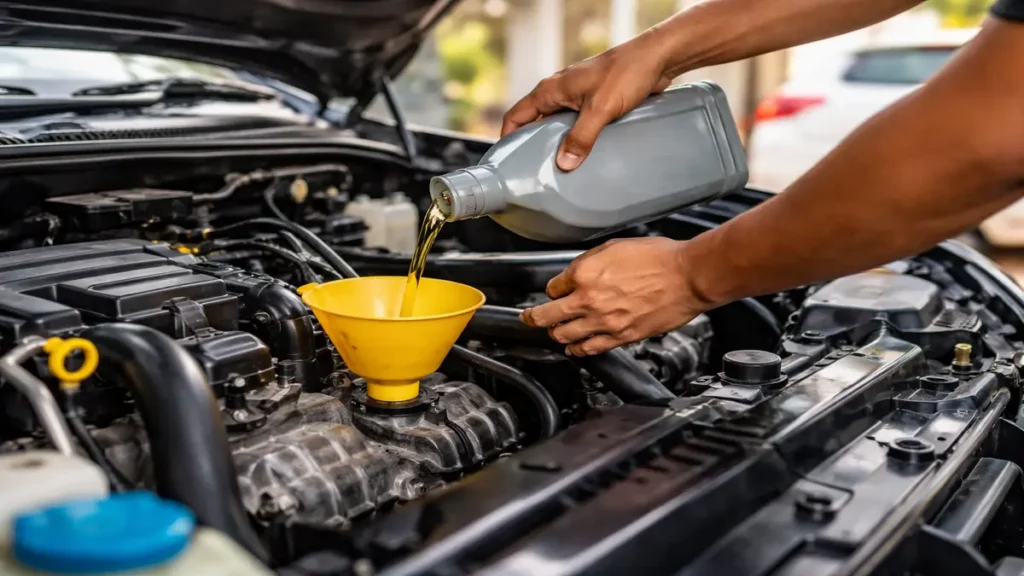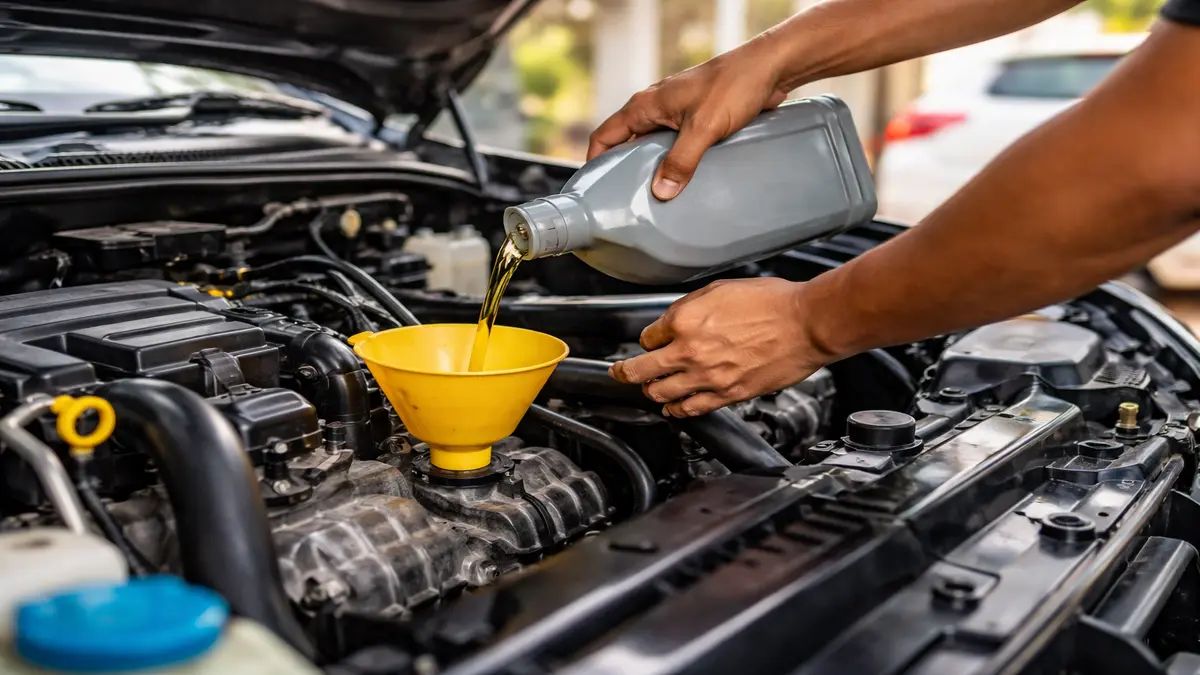
Learn the best Engine Maintenance Tips India roads—oil change schedule, filters, coolant care, mileage improvement, and expert FAQs to extend engine life.
If you drive in India, you already know this truth: our roads don’t go easy on any vehicle.
One day it’s bumper-to-bumper traffic in 40°C heat, next day it’s a highway run, and then—boom—monsoon waterlogging and potholes. Add dust, inconsistent fuel quality in some areas, overloaded cars, short trips, and missed service schedules… and you’ve got the perfect recipe for engine wear.
That’s why Engine Maintenance Tips India isn’t just “optional good practice.” It’s basically insurance.
And the nice part is: you don’t need to be a mechanic to maintain your engine properly.
You just need to understand:
- what matters most,
- what’s a myth,
- what needs attention in Indian climate and traffic,
- and what small habits save big repair bills.
This guide is written for normal drivers, car owners, and even bike/scooter owners who want engines that:
- start instantly
- idle smoothly
- pull cleanly
- give better mileage
- and last 2–3 lakh km without major drama.
So let’s get into it, properly.
Why Engine Maintenance Tips India is Different
Engine Maintenance Tips India advice from US/Europe sometimes doesn’t match our reality. Here’s why Indian engines face extra stress:
1) Stop-and-go traffic
Traffic means:
- more idling
- less airflow for cooling
- more fuel burnt per km
- engine running hot for long
2) Dust and pollution
Dust kills engines slowly:
- clogs air filter faster
- increases wear inside cylinders
- affects sensors and throttle body
3) Heat
Indian summers make:
- engine oil thinner
- coolant evaporation higher
- battery weaker
- overheating more likely
4) Monsoon water + humidity
This causes:
- rusting
- electrical issues
- water ingestion risk
- contaminated air filter
- misfires due to wet ignition parts (especially older cars)
5) Fuel quality variations
Bad fuel can cause:
- knocking
- clogged injectors
- carbon build-up
- poor pickup and mileage
So yes, engine maintenance here needs slightly more attention than “just follow the service book.”
The 80/20 Rule of Engine Maintenance Tips India (Most Important Things)
If you do only 5 things consistently, do these:
- Change engine oil on time
- Replace oil filter every oil change
- Keep air filter clean
- Keep cooling system healthy
- Don’t ignore engine warning signs
Most engine failures aren’t sudden. They happen due to repeated neglect.
1) Engine Oil: The Lifeline of Your Engine
If I had to pick one component that decides engine life, it’s oil. Not tires. Not battery. Not even fuel.
Engine oil handles:
- lubrication
- cooling
- cleaning
- protecting from corrosion
- sealing piston rings
What happens when oil is old?
Old oil becomes:
- thicker/sludgy OR too thin
- less protective
- full of contaminants
- less effective at cooling
That means:
- more friction
- more heat
- faster wear
- noisy engine
- lower mileage
Recommended engine oil change intervals in India (practical)
Car manufacturers may claim:
- 10,000 km
- 15,000 km
- 20,000 km in some models
But Indian conditions are harsher. Here’s a more realistic schedule:
| Driving Condition | Oil Change Interval (Best Practice) |
| Mostly city traffic, short trips | 6,000–8,000 km or 6 months |
| Mix of city + highway | 8,000–10,000 km |
| Mostly highways, clean environment | 10,000–12,000 km |
| Taxi / commercial / heavy use | 5,000–7,000 km |
| Turbo petrol engines | 6,000–8,000 km |
If your car is old (1 lakh km+) and starts burning oil or sounds rough, keep oil changes shorter.
Oil grade basics (simple explanation)
You’ll see oil grades like:
- 0W-20
- 5W-30
- 10W-40
The first number (“W”) relates to cold start flow. The second relates to performance at high temps.
Follow the OEM recommendation. Don’t experiment blindly.
Fully synthetic vs semi synthetic vs mineral
This is where many Indian owners get confused.
| Oil Type | Pros | Cons | Best For |
| Mineral | cheap | breaks down faster | old cars, low budget |
| Semi-synthetic | decent balance | still degrades in heavy traffic | most regular cars |
| Fully synthetic | best protection, longer life, better in heat | costly | turbo engines, premium cars, long term ownership |
If you plan to keep a car long term, full synthetic often pays itself back in reduced wear.
Real Indian tip: don’t “extend oil life”
Indian workshops sometimes say: “Sir oil looks fine, we’ll change later.”
No.
Oil can look clean and still be chemically broken down.
Change it on schedule.
2) Oil Filter: The Small Part That Saves Your Engine
People spend ₹4,000–₹6,000 on oil but try to save ₹200 on oil filters. That’s like washing your face with dirty water.
Oil filter removes:
- metal particles
- carbon residues
- sludge deposits
If you don’t change it, dirty oil circulates again.
Rule: Change oil filter every oil change.
3) Air Filter: Mileage & Power Secret (Especially in India)
In India, air filter maintenance gives instant results because dust is everywhere.
Clogged air filter causes:
- lower airflow
- richer fuel mix
- reduced mileage
- sluggish pickup
- higher engine carbon deposits
Air filter replacement schedule (India practical)
| Environment | Check | Replace |
| Dusty cities / rural | every 5,000 km | 10,000–15,000 km |
| Clean highway use | every 10,000 km | 20,000 km |
Many cars have washable filters, but paper ones shouldn’t be washed.
If your mileage suddenly drops, check the air filter first. It’s often the culprit.
4) Fuel Quality + Fuel Filter: Don’t Ignore This
Bad fuel is not always visible, but your engine feels it:
- knocking sound
- hesitation on acceleration
- jerking
- poor mileage
Fuel filter replacement
Fuel filter protects injectors/carburetors from dirt.
| Vehicle Type | Replace Interval |
| Petrol cars | 30,000–40,000 km |
| Diesel cars | 20,000–30,000 km |
| Bikes (FI) | 15,000–25,000 km (depends on model) |
If you frequently fuel from unknown pumps, shorten the interval.
India best habit: stick to a good fuel pump
Pick:
- high turnover pumps (busy ones)
- trusted brands
- clean facility
Low sales pumps mean fuel stays longer in the tank and contamination risk increases.
5) Spark Plugs: Small Part, Big Difference (Petrol Engines)
Spark plugs affect:
- ignition quality
- mileage
- engine smoothness
Bad plugs cause:
- misfire
- vibrations
- reduced mileage
- engine light
Spark plug types
| Plug Type | Life | Notes |
| Copper | 20k–30k km | cheapest |
| Platinum | 60k km | good for most cars |
| Iridium | 80k–1 lakh km | best, expensive |
If your car is older and mileage is dropping, new plugs often feel like a mini “engine refresh”.
6) Cooling System: The Overheating Prevention Toolkit
In India, overheating is a real threat in:
- traffic jams
- hill climbs
- summer highways
- AC on full blast
Cooling system includes:
- coolant
- radiator
- radiator cap
- hoses
- thermostat
- water pump
- cooling fan
Coolant maintenance
Some people top up the radiator with plain water. That’s risky.
Coolant does:
- anti-freeze (not needed much in India, but still relevant in cold hills)
- anti-boil protection
- prevents rust inside radiator and engine passages
- lubricates water pump
Replace coolant every 2–3 years (or as per OEM).
Signs your cooling system needs attention
- temperature gauge climbing
- AC performance dropping in traffic
- coolant smell
- frequent coolant top-up needed
- white/green stains near radiator hose joints
Never ignore overheating. One overheating incident can:
- warp cylinder head
- blow head gasket
- damage pistons
And that becomes a ₹40,000–₹1,20,000 repair depending on the car.
7) Engine Belts: Timing Belt / Serpentine Belt
Belts run critical components:
- alternator
- AC compressor
- power steering
- water pump (in some cars)
Timing belt vs timing chain
- Timing chain: lasts longer, but can stretch
- Timing belt: must be replaced on schedule
Timing belt failure can destroy engine internals.
Timing belt replacement interval: often 60k–1 lakh km (check manual).
8) Battery Health Affects Engine Too (Yes)
Weak battery causes:
- slow crank
- misfires (in some cases)
- sensor issues
- poor ECU performance during start
In winter mornings or monsoon humidity, this gets worse.
Battery maintenance tips
- clean terminals
- check charging voltage
- avoid parking long with accessories on
If the battery is 3–5 years old, test it before long road trips.
9) Engine Mounts: If You Feel Vibrations, Don’t Ignore
Engine mounts hold the engine in place and absorb vibration.
Bad mounts cause:
- vibration in cabin
- knocking when shifting gears
- thud sound over bumps
Many people ignore it, but bad mounts stress:
- exhaust system
- driveshaft
- gearbox
10) Driving Habits That Quietly Damage Engines
This is the part nobody wants to hear, but it’s real.
Habit 1: Hard acceleration immediately after starting
Your oil needs a minute to circulate properly.
Start → wait 20–40 seconds → drive gently for first 2–3 km.
Habit 2: Riding clutch / lugging engine
Driving at low RPM in high gear causes strain.
Keep RPM in healthy band:
- petrol: 1,800–3,000
- diesel: 1,500–2,700 (depends)
Habit 3: Over-revving
Constant high RPM in small engines increases wear.
Habit 4: Short trips only
Short trips don’t let the engine reach ideal temperature → sludge forms faster.
If you do short trips daily, shorten oil change intervals.
Habit 5: Ignoring warning lights
Engine light means: “I found a problem.”
It may still drive fine, but damage continues silently.
11) Carbon Build-up: Modern Engine Problem (India Edition)
With:
- heavy traffic
- short trips
- idling
- low quality fuel
carbon deposits form on:
- intake valves
- throttle body
- injectors
- EGR (diesel)
- turbo vanes (diesel)
- catalytic converter
Symptoms of carbon build-up
- poor mileage
- weak pickup
- rough idle
- increased smoke (diesel)
- hesitation
What helps?
Use quality fuel
Don’t drive always at very low RPM
Occasional highway run helps (Italian tune-up concept — not redline, just healthy RPM driving)
Injector cleaning (only if needed)
Avoid random “engine decarbonizing” services unless there’s a real issue.
12) Diesel Engine Special Maintenance (India)
Diesel engines in India need extra attention:
- EGR valve clogging
- turbo health
- DPF issues (BS6 diesel)
- injector sensitivity
DPF (Diesel Particulate Filter) issues
Short city trips + low speed cause DPF clogging.
Symptoms:
- DPF warning light
- reduced power
- higher fuel consumption
Fix: take a 30–45 minute highway drive at steady RPM to regenerate DPF (as per car manual).
If the light stays on, visit the service center.
13) Turbo Engine Care Tips (Turbo Petrol/Diesel)
Turbo engines are powerful but more sensitive.
Golden rules:
- Use full synthetic oil (recommended)
- Don’t skip oil change
- Warm up gently
- Cool down: after highway run, idle 30–60 sec before switching off (especially in older turbo cars)
Skipping these shortens turbo life massively.
14) Engine Wash: Good or Risky?
Engine bay cleaning is okay if done properly.
But water sprayed directly on:
- ignition coils
- sensors
- alternator
- ECU wiring
can create misfires and electrical nightmares.
Best practice:
- use damp cloth + brush
- use degreaser cautiously
- avoid direct pressure wash
15) Service Schedule: What You Should Never Miss
Here’s a realistic Engine Maintenance Tips India checklist.
Engine Maintenance Tips India Checklist Table (India)
| Item | Ideal Interval | Why It Matters |
| Engine oil | 6k–10k km | reduces wear, improves smoothness |
| Oil filter | every oil change | prevents dirty oil circulation |
| Air filter | 10k–20k km | mileage + engine protection |
| Coolant | 2–3 years | prevents overheating, rust |
| Fuel filter | 20k–40k km | protects injectors |
| Spark plugs (petrol) | 30k–1 lakh km | smooth ignition + mileage |
| Timing belt (if applicable) | 60k–1 lakh km | prevents engine damage |
| Throttle body cleaning | 30k–50k km | improves idle/pickup |
| Injector cleaning | only if symptoms | avoids unnecessary work |
Comparison Table: DIY Maintenance vs Workshop Maintenance
| Task | DIY Possible? | Workshop Better? | Notes |
| Check oil level | Yes | No | do monthly |
| Oil top-up | Yes | No | use same grade |
| Engine oil change | Some can | Yes | needs proper disposal |
| Air filter change | Yes | No | very easy |
| Spark plug change | Depends | Yes | wrong torque can damage threads |
| Coolant replacement | No | Yes | needs bleeding air bubbles |
| Timing belt change | No | Yes | high risk job |
| Injector cleaning | No | Yes | use proper tools |
Common Engine Problems in India & What They Mean
1) Engine knocking
Likely causes:
- low quality fuel
- carbon buildup
- wrong spark plugs
- timing issues
- overheating
2) Overheating
Causes:
- low coolant
- radiator fan failure
- thermostat problem
- water pump failure
3) Misfire / jerking
Causes:
- bad plugs/coils
- injector clog
- weak battery
- air intake leak
4) Smoke
- black: rich fuel / injector issue
- blue: oil burning
- white: coolant leak/head gasket or condensation
Related Post
Yamaha MT-15 V2 (2025) – The Street Fighter That Rules the Roads!
Hero Vida VX2 Electric Scooter
Suzuki Burgman Hydrogen Scooter 2025:200 KM Range & Eco Power
Kawasaki Ninja H2R – The Beast That Breaks All Limits
All BMW Bike Models, Price, Images, Specs
FAQs (India Engine Maintenance)
1) How often should I change engine oil in India?
For city driving: 6,000–8,000 km or 6 months.
For mixed use: 8,000–10,000 km.
Highway: 10,000–12,000 km (if OEM allows).
2) Is fully synthetic oil worth it in India?
Yes, especially for:
- turbo engines
- heavy traffic
- long term ownership
It handles heat better and protects the engine.
3) Can I mix two different engine oils?
Avoid it. In emergencies, small top-up is okay but:
- keep same viscosity
- preferably same brand/spec
Then replace oil soon.
4) Why does mileage drop suddenly?
Most common causes:
- dirty air filter
- underinflated tyres
- old oil
- clogged injectors
- spark plug wear
- braking drag
5) Is engine flushing safe?
Not always. In older engines, aggressive flushing can loosen sludge and block oil passages.
Better: frequent oil changes with correct oil.
6) My car is running fine. Should I still do preventive maintenance?
Yes. Many engine issues show up late. Preventive care is cheaper than repair.
7) What’s the best fuel for long engine life?
Use a regular recommended grade from a trusted pump. Premium fuel is only useful in engines designed for it.
8) How do I know if coolant is low?
Check expansion tank markings (MIN/MAX).
Never open the radiator cap when the engine is hot.
9) Does idling harm the engine?
Excessive idling causes carbon build-up and wastes fuel. Short idling is fine.
10) Should I warm up my engine daily?
Modern engines don’t need long warm-up.
Start, wait 20–40 seconds, then drive gently for a couple of kilometres.
11) Can I skip service if my driving is low?
Low driving still ages oil/coolant.
Follow a time-based interval (e.g., 6 months or 1 year).
12) What engine oil is best for Indian summers?
The one recommended by the OEM.
Most modern cars in India run fine on 5W-30 or 0W-20 depending on model.
13) How to keep the diesel engine healthy in city driving?
- regular highway regeneration drives (for DPF)
- good fuel
- timely filter changes
- avoid only short trips
14) Is engine noise always a problem?
Some noise is normal. But sudden increase in:
- tapping
- knocking
- grinding
should be checked quickly.
15) What’s the biggest mistake Indian owners make?
Skipping oil changes or extending intervals too far.
Conclusion: Treat Engine Maintenance Like Habit, Not Expense
Engine Maintenance Tips IndiaIn , engine maintenance is not about being “extra careful.” It’s about being smart.
Engines don’t fail because of one bad day. They fail because of:
- delayed oil changes
- clogged filters
- overheating ignored once
- bad fuel repeatedly
- warning lights ignored
- rough driving habits
If you keep oil clean, filter fresh, coolant healthy, and drive with a little sense—your engine will stay smooth for years.
And honestly? That smooth quiet engine feel… It’s addictive. Once you experience it, you never want to go back.