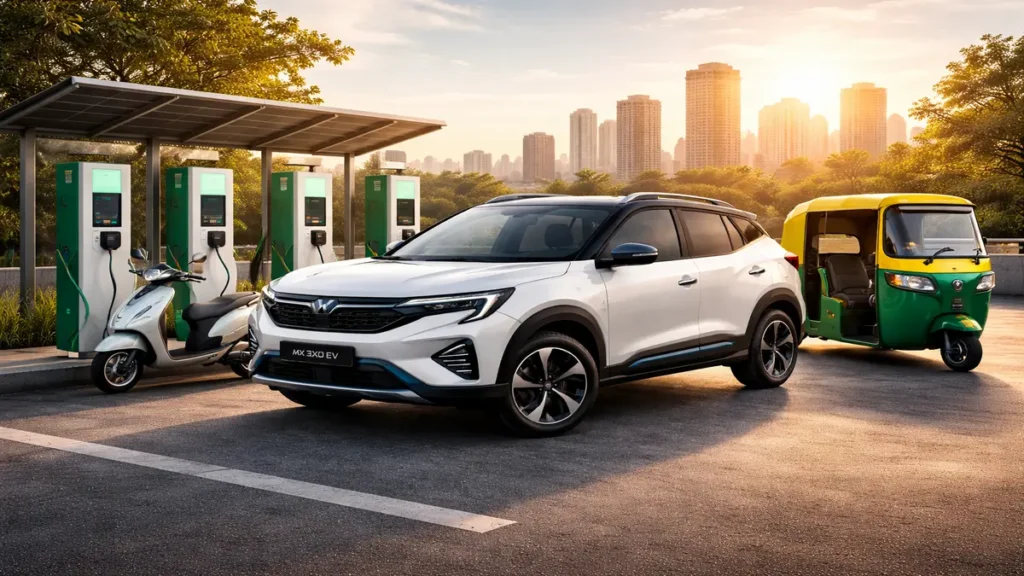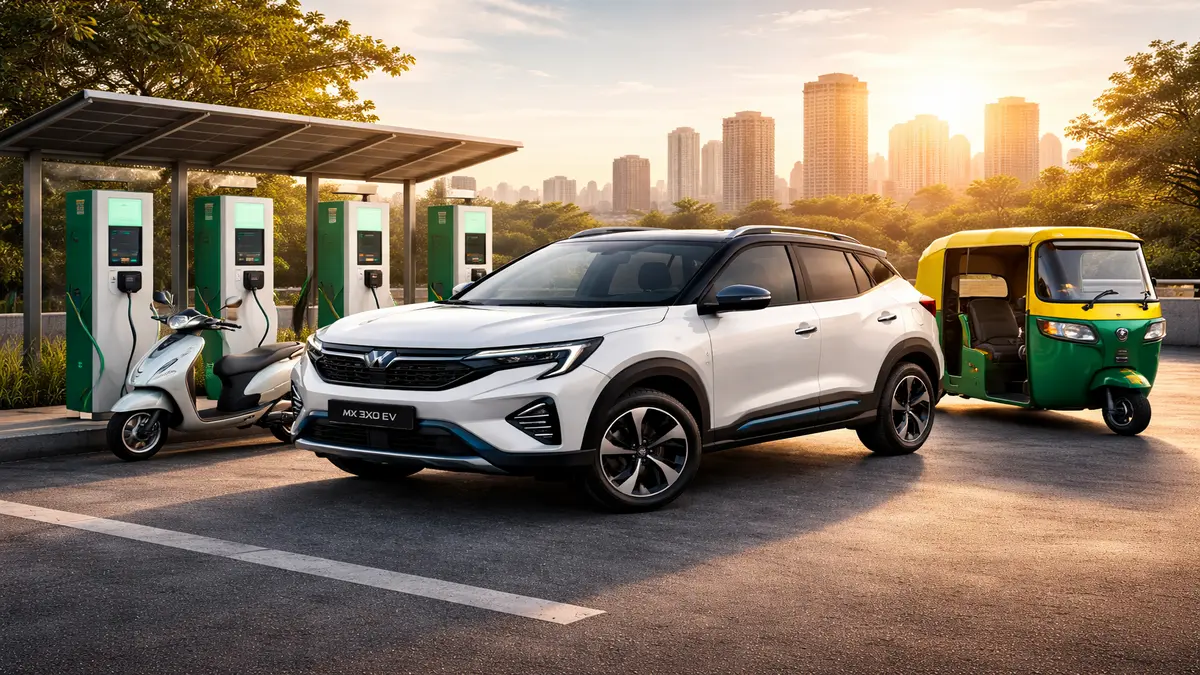
India’s new EV Subsidy Policy 2026 is here. See what changed, who will get benefits, how much you may save, and key FAQs in simple words.
Hello friends, welcome back.
I hope you’re doing well and everything is going fine at home.
Today we will talk about a topic that is very important for EV buyers and also for people who are planning to buy an electric scooter, bike, car, or even an EV for business use.
Government announces New EV Subsidy Policy 2026 — this is the kind of news that can change the market overnight. Because subsidy is not just a “discount”. In India, subsidy decides whether an EV feels affordable or not.
So friend, let’s understand this in deep detail — in simple English — like a normal person explaining it to another normal person. And yes, I’ll also add comparison tables, real-life examples, and FAQs.
Why EV Subsidy Policy 2026 Matters So Much in India (Real Talk)
Let me be honest.
In India, most people don’t buy vehicles just because they love new technology. They buy because:
- petrol is expensive
- daily running cost is painful
- maintenance is rising
- and people want “value for money”
Now, EVs help here. But EVs also feel costly at the time of purchase.
That’s why subsidy becomes the “bridge” between:
- “EV is nice”
and - “EV is possible for me”
So brother, let’s know some more interesting facts… Do you know it’s very special or unique?
EV subsidy doesn’t only help customers. It also helps:
- EV makers
- battery makers
- charging businesses
- and job creation
So it’s not just “discount money”. It’s a government strategy.
What Is the New EV Subsidy Policy 2026?
When people hear “EV Subsidy Policy 2026”, many think:
“The government is giving a huge subsidy again!”
But reality is a little different.
The EV subsidy structure in India is moving towards a more targeted approach, meaning:
Support will focus on:
- electric 2-wheelers
- electric 3-wheelers
- e-buses / public transport
- commercial/fleet EV adoption
- charging infrastructure
Support will slowly reduce for:
- private electric cars (direct purchase subsidies)
So the future direction looks like:
More incentives for mass adoption + business use, rather than giving heavy subsidies to private expensive cars.
This is important to understand.
Quick Background: How EV Subsidy Policy 2026 Worked
Before we jump into 2026, it’s good to understand what happened in the last few years.
1) FAME II (Old Big Scheme)
This scheme helped kickstart EV adoption in India.
It mainly supported:
- e-scooters
- e-rickshaws
- e-buses
- limited e-cars (not for everyone)
2) EMPS 2024 (Temporary Support)
After FAME II, the government brought a short-term scheme to continue support, mainly for 2W and 3W.
3) PM E-DRIVE (Current Direction into 2026)
This is the scheme that continues incentives and keeps EV demand alive, with defined targets and structure.
So friend, the message is clear:
The government is not stopping EV support.
But it is changing the way support works.
The Main Highlights of the EV Subsidy Policy 2026 (Simple Points)
Here are the key highlights (in easy words):
1) Subsidy is now more “category-focused”
Instead of giving subsidy to everyone, government wants to support segments that impact maximum people:
- 2-wheelers (highest users)
- 3-wheelers (public mobility + delivery)
- buses (mass transport)
2) Subsidy depends on performance and standards
This is important.
Earlier, people were only thinking:
“Subsidy mil rahi hai toh le lo.”
Now government wants:
- safe batteries
- proper testing
- performance standards
- real safety rules
That means:
only eligible EV models will get subsidy
So brother, let’s know some more interesting facts… Do you know it’s very special or unique?
This helps remove low-quality EVs from the market, especially unsafe scooters.
3) Strong push for charging infrastructure
EV adoption can’t grow if charging doesn’t.
So 2026 policy focuses more on:
- public chargers
- fast charging stations on highways
- city charging points
- charging in housing societies
4) More support for fleet and commercial EVs
This is a smart move.
Because commercial vehicles run more daily, meaning:
- they save more fuel
- they reduce more pollution
- they create faster EV growth
So you’ll see more support for:
- e-taxis
- delivery EVs
- e-rickshaws
- logistics EV vans
How the EV Subsidy Policy 2026 Changes Things for Different Buyers
Now let’s break it into buyer types.
1) For Electric Scooter Buyers
Good news.
Government support is still expected to help:
- reduce upfront cost
- increase quality standards
- push good brands
Expected impact:
More affordable scooter prices
Better battery safety
More competition
2) For Electric Rickshaw / 3-Wheeler Buyers
This segment is very important in India.
The policy aims to:
- reduce total cost
- improve quality
- increase adoption for public transport and goods delivery
So friend, if you have a small business and want an EV for transport, this EV Subsidy Policy 2026 supports you.
3) For Electric Car Buyers (Private Users)
This is where people get confused.
Truth:
Private EV cars may not get heavy direct subsidies.
But that doesn’t mean no benefit.
You still get advantages like:
- road tax waivers in some states
- registration fee benefits
- lower running cost
- possible state incentives
So brother, buying an EV car becomes more of a value decision rather than subsidy decision.
EV Subsidy Policy 2026: What the Government Wants to Achieve
This EV Subsidy Policy 2026 is not only for selling EVs.
Government goals include:
Reducing oil import dependency
India imports a lot of crude oil.
More EV = less petrol/diesel use
Less petrol use = less import bill
Cleaner cities
2-wheelers and 3-wheelers are everywhere.
If these become electric, pollution drops fast.
Job creation in EV ecosystem
Battery plants, chargers, EV service, software, manufacturing — jobs increase.
Stronger Indian EV industry
Instead of depending fully on imports, India wants:
- local battery production
- local EV components
- local charging network
- local innovation
So friend, subsidy is not “free money”.
It is building an industry.
Comparison Table: Old Subsidy System vs EV Subsidy Policy 2026
Here is a simple comparison table for better clarity:
| Topic | Old EV Subsidy Style | New EV Subsidy Policy 2026 |
| Focus | More broad | More targeted |
| Major Support | 2W, 3W, buses | 2W, 3W, buses + charging |
| Private EV Cars | Some support earlier | Less direct purchase subsidy |
| Quality Rules | Limited enforcement | More strict standards |
| Safety | Improving slowly | Stronger safety & battery standards |
| Charging Support | Growing | Bigger push in 2026 |
| Commercial EVs | Supported | More priority |
So brother, this is the biggest difference:
Policy 2026 is more mature and practical.
How Much Subsidy Can You Expect in 2026?
Now this is the biggest question.
But I’ll say this honestly:
Subsidy numbers may change based on:
- scheme limits
- yearly budget
- vehicle category
- battery capacity
- adoption target completion
So instead of giving one fixed number that may mislead, I’ll explain the pattern:
EV Subsidy Policy 2026 is usually calculated based on:
- ₹ per kWh support (battery size based)
- capped maximum subsidy amount
- limited number of vehicles under scheme
So friend, subsidy is not “unlimited”.
Once the target number is completed, subsidy stops.
That’s why some people say:
“I waited and the subsidy ended.”
Yes, that happens.
Real-Life Example: How Subsidy Changes EV Buying
Let’s take a simple example.
Example 1: Electric scooter buyer in a town
A boy wants a scooter for:
- college
- coaching
- daily run
If the subsidy gives a benefit of ₹10,000–₹20,000 type range (example), that’s huge.
Because it means:
- EMI reduces
- down payment reduces
- decision becomes easier
Example 2: Delivery business buyer
A small shop owner wants an EV for deliveries.
Subsidy + low running cost makes:
- monthly expenses lower
- profit increases
So brother, subsidy helps EV adoption where it matters most — daily running users.
What Happens After March 2026? Big Question
Many people ask:
“What after 2026?”
Most likely, EV incentives will not suddenly stop.
But they can evolve into:
- production linked incentives (PLI)
- charging infra support
- battery manufacturing support
- tax and fee benefits
- state-level subsidies
Meaning:
Government support continues, but in different forms.
So friend, don’t panic thinking EV benefits end.
The policy is shifting, not stopping.
State EV Subsidies vs Central EV Subsidies (Important)
In India, EV incentives come from:
Central Government schemes
These are national programs.
State Government EV policies
This is where things get interesting.
Some states give:
- road tax exemption
- registration fee waiver
- additional incentives on EV 2W, 3W, taxis
- charging infra support
So brother, always check your state EV policy, because sometimes state benefits are more impactful than central subsidy.
Read More
Hyundai Loniq 6 Review: Stylish, Futuristic & Fully Electric Car in India
Kia EV9 Review 2025 – Specs, Price, Range & Global Market Insights
Kia EV3 – The Compact Electric SUV Redefining Affordable EV Mobility
EV Subsidy + Tax Benefits in India (2026 Angle)
Even if direct subsidy becomes limited for cars, tax benefits still matter.
Some common EV benefits:
- reduced or zero road tax in many states (varies)
- registration fee exemption
- income tax deduction on EV loan interest (under rules, conditions apply)
So friend, EV savings is not only a subsidy.
EV savings is a combination of:
- lower running cost
- lower maintenance cost
- possible tax/state benefits
What This EV Subsidy Policy 2026 Means for EV Prices in 2026
Now the market impact:
For e-scooters
- Prices may stay stable or slightly lower
- more quality models will remain
For e-3 wheelers
- more adoption
- better organized market
For EV cars
- car prices may not fall a lot due to subsidy reduction
- but competition may improve pricing
So brother, car makers may start giving:
- more discounts
- better finance options
- longer warranties
because subsidies alone can’t sell cars forever.
Who Wins and Who Loses in EV Subsidy Policy 2026?
Let’s be practical.
Winners
- daily commuters
- delivery + commercial buyers
- EV brands with quality products
- consumers using EV 2W & 3W
- charging infrastructure players
Losers
- low quality EV makers
- brands depending only on subsidy
- unsafe battery products
So friends, in the long run, this is good.
Tips Before Buying an EV Subsidy Policy 2026(Very Practical)
So brother, if you are buying EV in 2026, do this:
1) Confirm subsidy eligibility first
Not all models get subsidies.
2) Buy earlier if target limits are near completion
Because subsidy often ends after targets are met.
3) Don’t buy EV only because of subsidy
Buy it because:
- you drive daily
- you can charge comfortably
- your route suits EV
4) Check charging access
Home charging is the biggest advantage.
FAQs – EV Subsidy Policy 2026
1) What is the new EV Subsidy Policy 2026?
It’s a targeted subsidy structure where incentives focus more on 2W, 3W, buses, fleet vehicles, and charging infrastructure, with stronger safety and performance rules.
2) Will electric cars get a subsidy in 2026?
Direct purchase subsidies for private EV cars may be limited, but buyers can still get state-level incentives, road tax/registration benefits, and lower running cost advantage.
3) Will electric scooters continue to get subsidies in 2026?
Yes, electric 2-wheelers remain a key priority segment because they impact the maximum number of users in India.
4) Is subsidy available for commercial EVs?
Commercial EVs, fleet vehicles, delivery EVs, and e-3 wheelers usually get better policy support because they run more and reduce pollution faster.
5) Can subsidies end suddenly?
Yes. Many EV subsidies have targets and budget limits. Once those are completed, the subsidy can be reduced or stopped for that period.
6) How do I know if my EV is eligible?
Check:
- official government scheme guidelines
- approved OEM list
- dealer documentation
- EV subsidy portal in your state (if available)
7) Will EV prices go down because of policy?
Not always. Policy supports adoption, but final pricing depends on:
- battery cost
- manufacturer pricing
- competition
- import/localization
8) Should I wait to buy an EV Subsidy Policy 2026?
If your daily running is high and charging is available, waiting may not help. EV savings start from day one. If subsidy targets are limited, early purchase can sometimes be better.
Final Conclusion (Normal Person POV)
So friend, here’s my honest conclusion.
The EV Subsidy Policy 2026 is not about giving money randomly.
It’s about building EV adoption in the segments that matter most.
- 2-wheelers and 3-wheelers = mass adoption
- buses and public transport = big pollution cut
- commercial EVs = fast transition
- charging infra = long-term EV success
And yes — Do you know it’s very special or unique?
Because this policy is slowly making EVs strong even without heavy subsidies.
That means in future:
EV will not depend on government support.
EV will stand on its own benefits — low running cost and better tech.