Hyundai Kona EV detailed India review with real-world range, charging time, running cost, last price, used buying tips, comparison table and FAQs.
There was a time in India when “electric car” meant two things only.
Either it was a small city car that people bought mainly to save fuel costs… or it was some futuristic expensive model that looked cool but felt far away from real-life budgets.
Then Hyundai brought the Kona Electric to India, and the whole EV scene changed a little.
Not because it was perfect. Not because it was cheap. And definitely not because it had the biggest charging network behind it.
It mattered because the Kona was one of the first EVs in India that felt like a proper global car. Solid build. Premium cabin. A serious range figure. And that “smooth silent power” that people only understood after they drove it once.
Even today, the Hyundai Kona EV is remembered as Hyundai’s first big EV step in India. And yes, Hyundai later discontinued the Kona Electric in India (June 2024), but that doesn’t make it irrelevant. In fact, it makes this guide more useful—because many buyers now look at it in the used market, and many still compare it with new EVs for understanding value.
So let’s do this properly: real story, real ownership points, full details, range reality, charging costs, price in India, comparisons, mistakes to avoid, and FAQs.
Hyundai Kona EV: Quick Snapshot
Hyundai Kona Electric (India spec) came with:
- 39.2 kWh lithium-ion battery
- ARAI claimed range around 452 km
- Motor output around 136 PS (134 bhp)
- Strong torque around 395 Nm
- Premium features like sunroof, ventilated seats, cruise control (variant dependent)
These headline numbers are widely listed across Indian auto sources.
The Real Story: Why Hyundai Kona EV Was a Big Deal
When Hyundai launched Kona Electric in India (2019), most EV discussions were still in the “future” category. People were curious but doubtful:
- “Battery will die in 2 years”
- “Charging kahaan karenge?”
- “Range fake hoga”
- “Repair cost will kill me”
Hyundai didn’t fight these doubts using marketing lines. They fought it using product quality. Hyundai Kona EV felt like a premium crossover, not like an experiment.
And it gave India something important: confidence that EVs can be normal cars, not just fuel-saving gadgets.
The Kona wasn’t mass-market, but it became a reference point.
Design & Road Presence
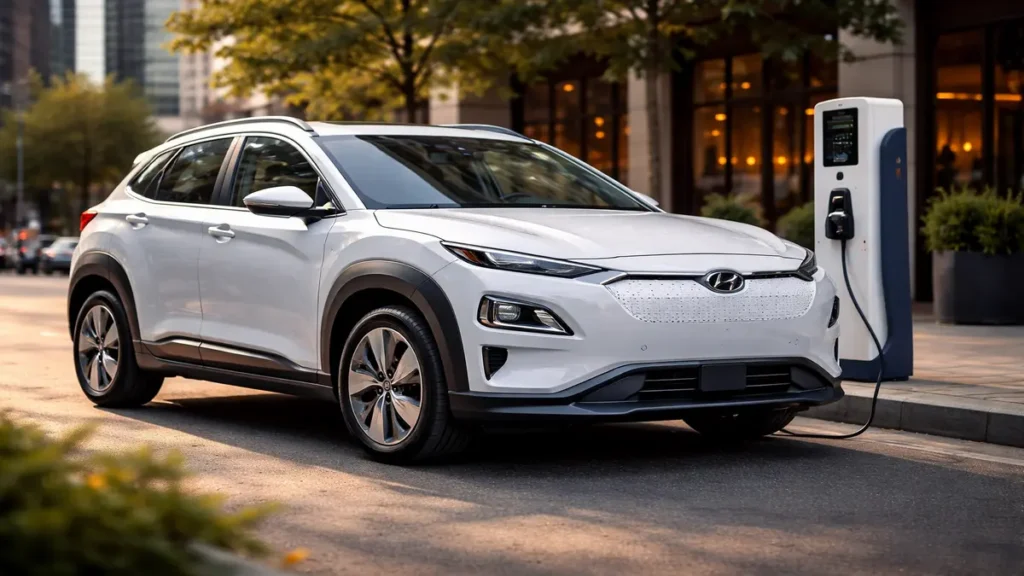
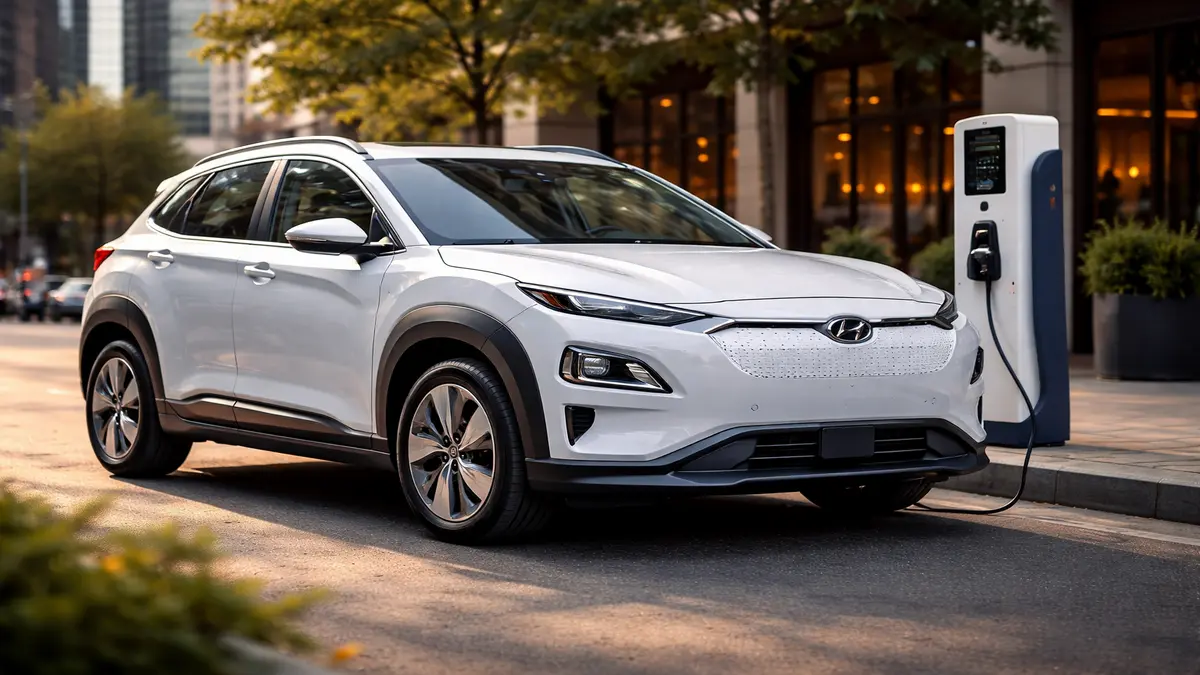
Hyundai Kona EV’s design is clean and slightly futuristic, but not weird. It looks like a compact SUV/crossover with EV-specific touches:
- closed-off grille style front
- aerodynamic wheel design
- sharp LED setup
- compact but premium proportions
On Indian roads it had a “rare car aura.” Not everybody knew what it was, but people knew it looked expensive.
And that’s still true in 2026.
Cabin Experience (Still Feels Premium)
Inside, Kona was ahead of its time in India EV terms.
You get:
- premium dashboard layout
- touchscreen infotainment
- digital instrument cluster
- automatic climate control
- ventilated seats (big plus in Indian summers)
- wireless charging
- sunroof and safety tech (depending on trim/market updates)
Many people don’t realize this at first: EV smoothness + premium cabin = fatigue drops a lot.
Even after driving for an hour in city traffic, your body feels less tired compared to many petrol/diesel SUVs.
Kona had that “quiet premium” vibe.
Battery, Motor & Performance (The EV Advantage)
Battery Capacity
The Kona Electric in India came with a 39.2 kWh battery.
Now, 39.2 kWh may not sound huge today (some new EVs have 45–60 kWh), but Kona’s efficiency was strong. That’s why it delivered an impressive claimed range.
Claimed Range
ARAI ranges around 452 km.
Torque
This is where Kona shocked people. 395 Nm torque in a compact car is serious.
You press the pedal and it moves instantly. No gear downshift drama, no turbo lag, no engine noise.
This is the first moment when many first-time EV drivers go:
“Bhai yeh toh rocket hai.”
0–100 and Driving Feel
Kona could do 0–100 in under 10 seconds in many reports, but more important than numbers is the feel:
- instant response
- smooth acceleration
- confident overtakes
- calm cruising
In city driving, Kona feels quick without being aggressive. The power is always available, so you stop worrying about overtakes.
Real Range in India (Honest Truth)
This is the biggest thing people care about.
Real-world range depends on:
- speed pattern (city vs highway)
- AC usage
- tyre pressure
- driving style
- temperature
In typical Indian conditions:
City (slow traffic + regen helps):
- around 330 to 420 km possible (depending on AC and driving)
Highway (90–110 kmph steady):
- around 250 to 330 km realistic
If you drive hard (fast acceleration, high speed), range drops faster.
The Kona is efficient, but physics is physics.
Charging: Time, Options, Cost in India
Charging Time (Typical figures listed)
Many listings mention around:
- DC fast charging 0–80% in under 1 hour
- AC charging around 6–7 hours on a 7.2kW setup
- very slow on regular home socket (overnight / long hours)
These charging figures are commonly listed by India car portals.
Home Charging Reality
For Kona owners, home charging was the “main lifestyle.” People who bought Kona usually had:
- fixed parking
- ability to install wall charger
- predictable daily running
If you don’t have home charging, Kona ownership becomes stressful.
Charging Cost
Rough estimate:
- Battery 39.2 kWh
- Electricity rate average ₹7–10 per unit (varies city to city)
So full charge cost might land around ₹275 to ₹400 at home.
Even with losses, it’s cheap compared to petrol.
If your daily running is high, EV savings become real.
Ride Comfort & Handling
Kona’s ride is not like a soft “Indian tuned” SUV. It feels more European/global:
- stable at speed
- planted in corners
- slightly firm over sharp potholes
On good roads it feels premium.
On broken roads, you will feel it more than a Creta-level soft SUV.
But handling wise, Kona feels confident.
Safety
Many listings show Kona Electric having a strong safety reputation including high safety ratings in some sources.
Even without getting into “rating politics,” Kona’s build and safety features were considered premium for its segment in India at the time.
Price in India (Important Point in 2026)
When it was sold new:
Kona Electric was positioned premium, around ₹23–24 lakh ex-showroom (last recorded) depending on variant/time.
Some sources still show last recorded prices around:
- ₹23.84 lakh (ex-showroom type listings)
- Around ₹24.03 lakh for certain trims
Important 2026 Reality:
Since Kona Electric is discontinued in India (June 2024), you won’t typically buy it new in the normal way.
So for 2026 buyers:
- Kona EV becomes a used EV purchase
- price depends heavily on battery health, condition, and city market
Why Hyundai Discontinued Hyundai Kona EV in India
Short version: not because it was bad.
It was discontinued because:
- it was expensive for mass market
- Hyundai planned more localized EVs (like Creta EV direction)
- shifting focus to bigger volume products
This was reported by major auto outlets around June 2024.
Used Hyundai Kona EV Buying Guide (Don’t Make These Mistakes)
If you’re considering a Hyundai Kona EV in 2026, please don’t buy a normal used petrol car. EV checklists are different.
1) Battery Health Check Is Mandatory
Ask for:
- battery SOH (state of health)
- service history
- charging habits
A Kona with a gentle charging history will feel “newer” than one abused with constant fast charging.
2) Check Charger + Accessories
Confirm:
- portable charger included
- wall charger status
- warranty documentation
3) Check Suspension and Tyres
EV torque eats tyres faster if driven hard.
4) Check Software Updates
Some cars improve efficiency and charging behaviour with updates.
Comparison Table (Hyundai Kona EV vs MG ZS EV vs Tata Nexon EV)
Here’s a clean comparison you can actually use.
| Point | Hyundai Kona EV | MG ZS EV | Tata Nexon EV |
| Price Position (when new) | premium ~₹24L class | mid-premium | mass market |
| Range style | very efficient | bigger car feel | city-friendly |
| Driving feel | fast + premium | smooth + spacious | peppy, practical |
| Cabin | premium global feel | modern, roomy | functional, Indian tuned |
| Best for | premium compact EV | family EV SUV | daily city EV |
| Weak point | price + discontinued | cost, charging depend | highway range limits |
CarWale comparison pages show Kona priced higher than Nexon EV and ZS EV in listed comparisons.
Who Should Buy Hyundai Kona EV in 2026?
Buy Kona EV if:
- you want a premium used EV
- you have home charging
- your daily running is high
- you want silent performance + solid build
- you want a rare car with classy feel
Avoid Kona EV if:
- you can’t install home charger
- your usage is mostly highway long distance without charging planning
- you want cheap repairs everywhere
- you’re uncomfortable buying a discontinued model
Hyundai Kona EV Ownership Costs (Reality Check)
Service
EVs typically have lower service cost than ICE cars, but you must still maintain:
- tyres
- suspension
- brake pads
- coolant systems
- AC system
- software checks
Battery Warranty
Many EVs come with long battery warranty terms; Kona also had battery warranty structure listed in some sources.
But in the used market, warranty transfer terms matter. Always verify with Hyundai/service.
Read More
Hyundai Loniq 6 Review: Stylish, Futuristic & Fully Electric Car in India
Kia EV9 Review 2025 – Specs, Price, Range & Global Market Insights
Kia EV3 – The Compact Electric SUV Redefining Affordable EV Mobility
FAQs: Hyundai Kona EV India
1) What is the Hyundai Kona EV price in India?
The last recorded ex-showroom price was around ₹23.84 –₹24.03 lakh depending on listings/variant.
2) Is the Hyundai Kona EV discontinued in India?
Yes. Hyundai discontinued Kona Electric in India around June 2024 as reported by major outlets.
3) What is Hyundai Kona EV battery capacity?
India Kona Electric came with a 39.2 kWh battery.
4) What is the Hyundai Kona EV claimed range?
The claimed ARAI range is around 452 km.
5) What is the real range in Indian conditions?
Real range generally sits around:
- City: 330–420 km
- Highway: 250–330 km
Depending on speed, AC, and driving style.
6) Is the Hyundai Kona EV good for highways?
Yes for planned trips. It is stable and fast. But charging planning is necessary.
7) Kona EV vs MG ZS EV: which is better?
If you want premium compact efficiency, Kona shines.
If you want a bigger family SUV feel, ZS EV wins.
8) Kona EV charging time?
DC fast charging can do around 0–80% in under 1 hour, and AC charging takes several hours depending on charger power.
9) Is the Kona EV good as a used car in 2026?
Yes, if:
- battery health is strong
- service history is clean
- warranty status is clear
Otherwise, don’t gamble.
Final Verdict (Human Opinion)
The Hyundai Kona EV was never a “budget EV.” It was a premium statement.
And that’s exactly why it still matters today.
If you find a clean used Kona EV with a healthy battery and proper service records, it can still feel like a premium electric crossover even in 2026. It’s quick, smooth, and mature.
But don’t buy it with blind excitement. Buy it with smart checks.
Because EV ownership rewards planning. And Kona EV especially rewards people who treat it carefully.